Showing posts with label sporty car. Show all posts

Friday, April 13, 2012

Lamborghini "Concept S"

Lamborghini "Concept S"


"The "Concept S" represents everything that Lamborghini stands for. It is extreme, uncompromising and Italian," commented Stephan Winkelmann, President and CEO of Automobili Lamborghini. "A production decision has not yet been made, though we were encouraged by the positive response to the driveable prototype at both Monterey and Pebble Beach."

Classic single-seaters did not have a traditional windscreen, but utilised the „saute-vent" in order to direct air over the head of the driver. In the "Concept S", these devices divide the cabin into two distinct compartments, giving the car an aggressive and futuristic look.

They also create a space between them that acts as an additional air inlet for the engine, which is positioned behind the seats. And like the Gallardo, which serves as the basis for this stunning supersportscar, the "Concept S" is equipped with a powerful V10 engine.

The Lamborghini "Concept S" design study premiered at this year's Geneva Motorshow as an extreme and spectacular expression of the Lamborghini brand. It was created at the Centro Stile Lamborghini in Sant'Agata Bolognese by Luc Donckerwolke, who drew inspiration from the classic single-seater racing cars of the past.
The driveable "Concept S" prototype has only changed slightly compared to the original design study. For example, the so-called "saute-vent" windscreens were re-designed for homologation reasons. The look of the car results even more extreme than the original.

Lexus LFA Super Sport Car

Lexus LFA Super Sport Car

Power for the rear-wheel-drive Lexus LFA, which is constructed using advanced carbon fiber technology, comes from a mid-front mounted 4.8L V10 engine that red lines at 9,000 rpm and makes 552-hp with a maximum torque of 354 lb-ft. Mated to a 6-speed Automated Sequential Gearbox, the LFA goes from 0-62 mph in just 3.7 seconds (0-60 mph in 3.5 seconds) with a top speed of 202 mph.

Lexus has finally taken the wraps of its new exclusive supercar the 2011 Lexus LFA. “The LFA is a thoroughbred supercar, a machine engineered to achieve a single goal – to deliver a supreme driving experience,” said Chief Engineer Haruhiko Tanahashi.
The Lexus LFA coupe will be produced at the Motomachi plant in Toyota City. Toyota will make just 500 examples at rate of 20 units per month “to ensure the finest build quality and attention to detail.”
The UK launch price for the LFA is €368,000 (approximately £336,000).

LEXUS LF-A Roadster

LEXUS LF-A Roadster


The LF-A Roadster’s LEXUS V10 engine supercar Concept
.
Lexus will stage the Australian debut of its own supercar, the LF-A Roadster, at the Melbourne International Motor Show on 27 February.The LF-A Roadster goes on display in Melbourne after headlining motor shows in Tokyo and Detroit.

The Roadster’s V10 engine is capable of producing more than 360 kilowatts and test-track speeds greater than 330km/h.
Its sleek design utilises a lightweight carbon-fibre and aluminium body that ensures structural rigidity is maintained, even without a roof.

Styling of the LF-A Roadster draws extensively from the Lexus L-Finesse design philosophy and has been designed to deliver maximum aerodynamic efficiency.
The rear of the Roadster is marked by a pair of wrap-around, arrowhead-shaped taillights and a trio of centrally positioned exhausts.
To attain the best possible weight distribution, Lexus engineers positioned the radiators at the rear of the vehicle, which also allows for a sleeker front-end design.
The two rear-mounted radiators are fed cool air by two large intake ducts located forward of the rear wheel wells, and heated air is vented out behind the vehicle via a pair of large grilles.
The engine is mounted in a “front-mid” configuration – in front of the passenger compartment, but behind the front-axle centreline.

2010 Ford Mustang Cobra Jet

2010 Ford Mustang Cobra Jet

Today, Ford Racing unveiled the 2010 Ford Mustang Cobra Jet at the Specialty Equipment Market Association (SEMA) show, which marks the continued evolution of the CJ as a factory-produced turnkey race car. In honor of the SEMA introduction, Ford Racing built and unveiled a one-of-a-kind "SEMA Special" silver Ford Mustang Cobra Jet complete with a charcoal Cobra Jet graphics package.

"With the 2010 Ford Mustang Cobra Jet, we had the luxury of a longer development cycle and the result is absolutely stunning. Where the 2008 Cobra Jet was an extremely potent starting point for NHRA Stock competition, the 2010 will enhance the car further. We are all excited to see the new Ford Mustang Cobra Jet in competition."

For decades, the Mustang has been the preeminent car in many forms of racing, including drag racing. The 2008Ford Mustang Cobra Jet added to that legacy this season with high- profile wins at the NHRA Winternationals and U.S. Nationals, and by setting numerous track records across the country.

The 2010 Cobra Jet, like its predecessor, is a factory-built race car that is intended for NHRA Stock and Super Stock racing. The goal for the 2010 Ford Mustang Cobra Jet was to enhance the race features to further make its own place in NHRA history. The 2010 CJ will come with all of the features of the 2008 car with enhancements that include options for a full race-prepared automatic or manual transmission, drag race-specific shocks and springs, manual steering and brakes, 8.50 certified rollcage, and an Aeromitive return-style fuel system with trunk-mounted fuel cell.

Additionally Ford Racing engineers have developed for the 2010 Ford Mustang Cobra Jet a factory-first launch control/rev limiter that will allow drivers to preset the rpm after they stage the car. When they are ready to leave, all they do is put the throttle pedal to the floor; they don't have the engine speed to free rev. Previously, the launch control/rev limiter was only available as an aftermarket option.

Ultima GTR720 Chevrolet 720bhp V8 Engine

Ultima GTR720 Chevrolet 720bhp V8 Engine

The Ultima Factory who are the current world record holders, have for the third consecutive year smashed the world record for sprinting to 100mph and back to zero again in the all conquering, multiple world record holding 200mph Ultima GTR supercar.The Ultima GTR720 recorded a blistering 1min 9.9secs lap time, which demolishes the previous record of 1min10.7secs set by seven-time world Formula 1 champion Michael Schumacher in hisFerrari FXX track car. To put things into perspective the Ultima is almost 10 seconds per lap faster than the fastest road car that Ferrari produces which is the renowned £450,000 Enzo.

The Ultima GTR used for the successful record attempt was the factory's standard production specification Ultima GTR640 demonstrator, which has recently been upgraded with a 720bhp Chevrolet V8 engine, and hence now known as the Ultima GTR720. The GTR720 was fully road legal, road tyred and equipped with a standard 5 speedG50 transmission and a standard production engine option from Ultima's official OE engine suppliers American Speed. No traction control devices or ABS braking aids were used.

Richard Marlow commented, ' We always knew that the Ultima was more than capable of achieving performance figures of this caliber. There is no other supercar in history which can match the pace of the Ultima GTR in this discipline. Furthermore the GTR720 is available at a fraction of the price of all other supercars and is also fantastic to drive at more sedate road speeds with its road friendly engine. It is currently being used as my daily driver in all weather conditions. I expect with these latest officially verified world records for the Ultima GTR to retain its title for a long time into the future as the fastest accelerating and decelerating supercar of all time. Along with all of our other previous world records we have achieved over the past couple of years, this is a superb showcase to officially demonstrate to the world just what the Ultima is capable of achieving and we have gained unprecedented worldwide automotive recognition and respect for our marque in the process'.

Mercedes C63 AMG Performance Package Plus

Mercedes C63 AMG Performance Package Plus


Mercedes C63 AMG Performance Package Plus brings both performance and visual enhancements for both the saloon and estate models. The Mercedes C63 AMG Performance Package Plus offer a power increase of 22 kW/30 hp.
Mercedes C63 AMG Performance Package Plus also includes high-performance braking system with composite technology on the front axle and a carbon fiber spoiler lip for the sedan. For the interior, the Mercedes C63 AMG Performance Package Plus offers a performance steering wheel and in nappa leather/Alcantara.With the Performance Package Plus, the Mercedes C63 AMG accelerates from 0 to 100 km/h in 4.4 seconds and 0 to 200 km/h in 13.9 seconds. This beats the 336 kW/457 hp standard model by up to 1.2 seconds (0–100 km/h: 4.5 seconds; 0–200 km/h: 15.2 seconds). The top speed is 250 km/h (electronically limited). The improvement in power output to 358 kW/487 hp is due to the AMG 6.3-litre V8 engine's modified engine compartment: the forged pistons adopted from the new SLS AMG super sports car together with new connecting rods and a lightweight crankshaft translate into a weight saving of three kilograms.

Reduced inertia boosts the agility and responsiveness of the uprated V8 engine, which is recognisable from the variable intake manifold painted in titanium grey. New engine management completes the powertrain measures in the Performance Package Plus for the Mercedes C63 AMG.
Enhanced driving dynamics ex factory for the Mercedes-Benz C 63 AMG: the new Performance Package Plus is an attractive optional extra that is designed to appeal to the power-hungry sports driver. The PerformancePackage Plus increases output by 22 kW/30 hp to 358 kW/487 hp. As a result, the C-Class approaches the level of performance offered by C-Class DTM vehicles, which deliver 377 kW/500 hp. The Performance Package Plus is available for the saloon and estate models and includes an AMG high-performance braking system featuring technology on the front axle, a carbon fiber spoiler lip (saloon) and an AMG performance steering wheel in nappa leather/Alcantara.
The Mercedes C63 AMG Performance Package Plus price is €7080.50 for the sedan model and €6426 for the estate.

Namir Hybrid Eco-Powered

Namir Hybrid Eco-Powered

Frazer-Nash, it probably isn't in the context of modern drivetrain technology like hybrid systems. Nonetheless, the brand that was long ago a famous British car maker is still around, albeit no longer building cars. In fact, hybrid drive systems is exactly what Frazer Nash is developing today and the company has collaborated withItaldesign Giugiaro to create a concept called the Namir.Think "hybrid eco-powered car" and you think "Prius" right? Well you shouldn't. You should substitute the mental image of that conventional, if revolutionary auto for the Frazer-Nash Namir from Giugiaro for two reasons. Firstly because it's a whole league of flashiness above Toyota's vaguely bug-eyed design. And secondly because the Namir will top-out at 187 mph.

The Namir's was revealed to the public at the Geneva Motor Show, and it's laying claim to the title of "fastest hybrid car in the world." Glancing at the photos you may also think "the most orange-colored hybrid car in the world" would be a fitting title, but I think that the overall super-car-like design mostly excuses the paint work.

Frazer Nash has developed a series hybrid drivetrain (like the Voltec drivetrain in the Chevy Volt) that uses an 814cc rotary engine driving a generator. The generator charges a 400V lithium polymer battery pack that feeds electrons to a pair of electric motors at each axle with a cumulative output of 362 hp. The system is claimed to give the Namir a top speed of 187 mph, 0-62 mph acceleration in 3.5 seconds while still managing 91.7 mpg (US)! Not too shabby.That acceleration is only just behind the fastest accelerating production car, the Bugatti Veyron, that manages 0-62 mph in 2.45 seconds...though it does so with a quad-turbocharged W16 gasoline engine.In contrast the Namir pushes out just 60kg/km of CO2, or around 60% of the latest road-legal hybrid cars, and manages a fuel efficiency of around 92 miles per U.S. gallon--which is about twice as efficient as driving a Prius. And with a full tank of gas it can go over 1,200 miles without a refill or recharge, and that's a far cry from the early days of hybrid gas-electric cars--incidentally a technology that's been 100 years in the making.

Aston Martin DB-ONE

Aston Martin DB-ONE


Ruben Vela, based in Spain designer The Aston Martin DB-ONE concept,product of independent.

The body surfaces of the DB-ONE highlight all the power emanating from the proposed 550 horsepower, 6.0 litre, V12 engine even when static. "Cars aren't static objects, so I belive it's important to show dynamism in the design. And this is much more important when you are designing a super-sports car," says Vela.
The rear of the Aston Martin DB-ONE concept is extremely clean due to the small gap in the tail which hides the taillights and a rear diffuser provides a neat finish to the design.
Although the Aston Martin DB-ONE is an independent design created outside the company and exists only on a computer and as a scale model, Aston Martin's new owners, Prodrive, could certainly take note of a few styling ideas introduced by Vela on the DB-ONE concept.

Wednesday, April 11, 2012

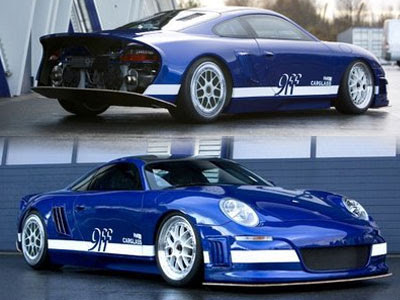
Porsche 9FF GT9


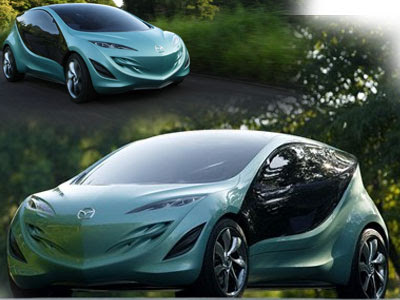
Sky Concept The Mazda 2010


The next-generation compact concept car imbued with Mazda’s fun-to-drive character, will make its Japanese debut at the Tokyo show The Mazda Kiyora. Featuring the next-generation Mazda SKY concept powertrain technologies and comprehensive advancements in weight reduction, the Kiyora achieves outstandingfuel economy, estimated to be 3.1 l/100 km (under Japan’s 10-15 mode test cycle).
To make its Japan debut * Mazda Kiyora concept car, which achieves 3.1 l/100 km fuel economy.
Mazda’s theme for the 2009 Tokyo Motor Show is “The Mazda SKY concept – Providing driving pleasure and environmental and safety features for all customers!” Under the headings of “Today,” “Tomorrow” and “The Future,” Mazda will display advanced technologies designed to improve the average fuel economy of Mazda vehicles sold globally by 30 percent before 2015 compared to 2008 levels. This is one of the goals of Mazda’s long-term vision for technology development, Sustainable Zoom-Zoom.
The SKY concept embodies Mazda’s desire to ensure an “everlasting blue sky” under which drivers will always be able to enjoy the pleasure of driving afforded by owning a Mazda. The concept also reflects the “sky’s the limit” aspirations of Mazda’s engineers as they employ unconventional thinking to achieve optimal performance in every vehicle that bears the Mazda nameplate.
Mazda is committed to significantly improving the core aspects of its vehicles that affect performance – engines, transmissions, and lighter vehicle weight – in order to achieve elevated driving pleasure together with outstanding environmental and safety features. The Mazda SKY concept defines Mazda’s approach to developing next-generation powertrains that will significantly improve the eco-friendliness and dynamic performance of all Mazda vehicles.
Based on the SKY concept, Mazda’s “Technologies for Tomorrow” display at this year’s Tokyo Motor Showwill include the next-generation direct-injection petrol Mazda SKY-G engine and the Mazda SKY-D clean diesel engine. Both offer improved eco-friendliness and torque thanks to optimised combustion efficiency. Mazda will also reveal its first next-generation automatic transmission, the Mazda SKY-Drive, which offers first-rate fuel economy and a direct driving performance feel
Alongside the SKY concept exhibits, Mazda will also feature a “Today’s Technologies” exhibit that includes i-stop, a unique idling stop system that was introduced with the all-new Mazda3 (Axela in Japan). “Future Technologies” will showcase the advanced Mazda Premacy Hydrogen RE Hybrid, with its hydrogen-powered rotary engine, and various vehicle technologies under development as part of Mazda’s drive to realise an accident-free and safe motorised society.


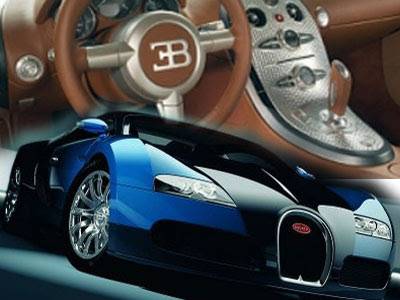
Veyron Bugatti


The Veyron was designed by Hartmut Warkuss of Volkswagen rather than Giorgetto Giugiaro of ItalDesign who had handled the three prior Bugatti concepts.
Development continued throughout 2001 and the EB 16/4 Veyron was promoted to "advanced concept" status. In late 2001 Bugatti announced that the car, officially called the Bugatti Veyron 16.4 , would go into production in 2003. The car experienced significant problems, however. High-speed stability was difficult, with one prototypedestroyed in a crash and another spun out during a press demonstration at the Monterey Historics event in Mazda Raceway at Laguna Seca . Production of the Veyron was delayed indefinitely.
After the release of the car, it has become known that while each Veyron is being sold for £840,000, the production costs of the car are approximately £5 million per vehicle. As Bugatti, and therefore Volkswagen, are making such a huge loss, it has been likened by influential journalist Jeremy Clarkson to Concorde ; both are largely impractical experiments in technology and ground-breaking performance created just to prove that it could be done. A car the like of the Bugatti Veyron may not be seen in production again for some time to come, if at all.
The Veyron features a W16 engine —16 cylinders in 4 banks of 4 cylinders, or the equivalent of two narrow-angle V8 engines mated in a vee configuration. Each cylinder has 4 valves , for a total of 64, but the narrow V8 configuration allows two camshafts to drive two banks of cylinders so only 4 camshafts are needed. The engine is fed by four turbochargers , and it displaces 8.0 L (7,993 cm³/488 in³) with a square 86 by 86 mm bore and stroke.
The Veyron's 16-cylinder engine is based on the innovative "W" design introduced in the 2003 VolkswagenPassat. The Veyron's version features two 90-degree V8s offset by 15 degrees. The offset allows each cylinder to be placed close to its neighbor, which reduces the total size of the massive 8.0-liter engine. A Formula 1?style dry-sump lubrication system keeps the engine moving smoothly. It's easier to spin many small turbochargers than one or two large ones, so Bugatti employs four turbos to reduce boost lag. The strategy works: The engine creates 922 lb.-ft. of torque at only 2,200 rpm.
Putting this power to the ground is a dual-clutch DSG computer-controlled manual transmission with 7 gear ratios via shifter paddles behind the steering wheel. Or it can be driven by full automatic transmission. The Veyron also features full-time all wheel drive , necessary given the output of the engine. It uses special Michelin PAX System run-flat tires, which had to be designed specifically for the Veyron, and which are capable of running at 402 km/h (253 mph).
The car's wheelbase is 2700 mm (106.3 in). Overall length is 4466 mm (175.8 in). It measures 1998 mm (78.7 in) wide and 1206 mm (47.5 in) tall. Curb weight is expected to reach 4300 lb (1950 kg) with a power to weight ratio of 513.3 hp per ton (metric) or 4.36 lb/hp (SAE).The Bugatti Veyron has a total of 10 radiators .

Mustang-Saleen-S7-Twin-Turbo


Saleen knows all about power. As in S281 Mustangs, N2O Focuses and the S7, America’s first (and still the only) mid-engine exotic supercar. When it went on sale in 2002, the S7 was the only street-legal car in the U.S. with more than 500 horsepower and 500 lb-ft of torque. The media and S7 owners have raved about the car since it first smoked the rear tires in anger. And it has been recognized by numerous automotive magazines as the fastest production car in the world. But during the past three years the automobile marketplace has witnessed an explosion of performance with models from manufacturers including Ferrari, Lamborghini, Mercedes-Benz, Porsche and Chevrolet touting power numbers above the once magic 500 level.
Designed by Saleen engineers, the S7's engine and drivetrain incorporate the latest in modern racing technology. The new all-aluminum V8 engine casting was engineered and tooled by Saleen to displace seven liters. Redline is 6500 rpm. Space age materials and engineering are used throughout, including stainless steel valves, titanium retainers, beryllium exhaust valve seats, an aluminum throttle body, Saleen designed aluminum CNC-machined cylinder heads and stainless steel exhaust system. An exclusive Saleen-designed Front Engine Accessory Drive (FEAD) system results in an extremely compact engine, allowing for better packaging and overall weight distribution. The V8 incorporates a unique Saleen-designed side-mountedwater pump, a belt-driven camshaft drive and a Saleen-engineered dry sump oil delivery system. The engine's mid-chassis placement optimizes weight distribution and center of gravity, making room for an unusually tall engine that allows for a very efficient induction system. Air enters a roof intake, passes through a 90-mm mass air meter and feeds into a carbon fiber plenum. From the plenum the air is routed to the twin ball bearing turbos, is pressurized to 5.5 psi max and then passes through an oval-bore throttle body into an aluminum intake manifoldwith eight individual runners.